
Showing posts with label Text. Show all posts
Showing posts with label Text. Show all posts
11/05/2018
Premise 2018 Reflective Statement and Film Review Links
Reflective Statement
Working on this project had helped to develop management skills, my understanding of how story elements come together, my knowledge of programs, and my skill in developing character designs.
Basing my goals on the feedback from previous projects I have made some positive progress during the premise project, as everyday I was sure to write down what I wanted to accomplish. As I was working from my own imagination is was important to understand what I wanted from the animation as a whole, so i recognising that helped to clarify my plot. A lot of my scenes and objects have some special technical attention like gobo lighting or fog effects that will need to be addressed in the future, but also during the creation of the animatic i learned a lot about how I can use after effects and premiere effects to my benefit, like the lowpass effect which helped to make the sounds outside the room. Also the style change, which occurred due to doubts that I would be able to create a realistic character in 3D, was an exercise in character design as I had to re calibrate each of the characters in order to match the styles correctly.
In the future I would like to develop my skills in page layout so I can make my art more presentable, and also my workflow in animatic creation as I am not satisfied with how it looks at the moment.
Film Reviews
Ethel and Ernest - https://dragooneranimation.blogspot.co.uk/2018/03/film-review-ethel-and-ernest-2016.html
Belleville Rende-Vous - https://dragooneranimation.blogspot.co.uk/2018/02/film-review-belleville-rendez-vous-2003.html#more
Waltz with Bashir - https://dragooneranimation.blogspot.co.uk/2018/02/film-review-waltz-with-bashir-2008.html
Paprika - https://dragooneranimation.blogspot.co.uk/2018/01/film-review-paprika-2006-japan.html
Mary and Max - https://dragooneranimation.blogspot.co.uk/2018/01/film-review-mary-and-max-2009-australia.html
Working on this project had helped to develop management skills, my understanding of how story elements come together, my knowledge of programs, and my skill in developing character designs.
Basing my goals on the feedback from previous projects I have made some positive progress during the premise project, as everyday I was sure to write down what I wanted to accomplish. As I was working from my own imagination is was important to understand what I wanted from the animation as a whole, so i recognising that helped to clarify my plot. A lot of my scenes and objects have some special technical attention like gobo lighting or fog effects that will need to be addressed in the future, but also during the creation of the animatic i learned a lot about how I can use after effects and premiere effects to my benefit, like the lowpass effect which helped to make the sounds outside the room. Also the style change, which occurred due to doubts that I would be able to create a realistic character in 3D, was an exercise in character design as I had to re calibrate each of the characters in order to match the styles correctly.
In the future I would like to develop my skills in page layout so I can make my art more presentable, and also my workflow in animatic creation as I am not satisfied with how it looks at the moment.
Film Reviews
Ethel and Ernest - https://dragooneranimation.blogspot.co.uk/2018/03/film-review-ethel-and-ernest-2016.html
Belleville Rende-Vous - https://dragooneranimation.blogspot.co.uk/2018/02/film-review-belleville-rendez-vous-2003.html#more
Waltz with Bashir - https://dragooneranimation.blogspot.co.uk/2018/02/film-review-waltz-with-bashir-2008.html
Paprika - https://dragooneranimation.blogspot.co.uk/2018/01/film-review-paprika-2006-japan.html
Mary and Max - https://dragooneranimation.blogspot.co.uk/2018/01/film-review-mary-and-max-2009-australia.html
20/02/2018
19/02/2018
18/02/2018

13/02/2018
Premise 2018 || 'A Boy and His Shadow' Script Revision 2
My premise is 'an unlikely friendship' because I want to make a film with a creepy/cute contrast. The title is 'A boy and his Shadow' to show how children often make believe to better suit their interests to play and be happy, but the real story is a much darker one involving the unknown entities that lurk in the further reaches of cyberspace.
Unlike E.T (1982), ALF (1986-1990), or similar films involving making friends with the unknown like Small Soldiers (1998), the plot is more focused on the creature itself, and why it is actually there; or at least provides a platform of discussion on why it is there. I have made the creature more convoluted in both its form and ambition to show that it is purely metaphysical, and it is up to the viewer to decide what its intention is.
05/02/2018
26/01/2018
Premise 2018 || Week 1 Initial Ideas and Inspirations

This story will be about a young boy who spends a lot of time in his room by himself with an old computer, even when the internet router is off. Every night a hideous poltergeist visits through the screen to play games with him and have fun. It could be an analogy about online friends.
It might be the case that i will need to simplify my idea down to keep it appealing to audiences, in this case the story will be about a boy who is friends with a ghost that appears to him when he is alone. It could be narrated over by a voiceactor if the friendship is mute, or if it is purely visual, in which case it could be important to focus more on the visual state to keep up quality in terms of sound. This leads me to think of the elements in balance, how I can match the voiceactors talent with my content. It is also important to note that I should be taking advantage of CG animation rather than attempting to imitate something which could be done better in real life.

The story in particular will focus on the monster, a concept from keyword 'online friends'. The many eyes, nose-like structures,and smoke-like, corpulent form represent the unified, intangible nature of the anonymous online. He emerges from the computer at night as a thick black smoke, enveloping the boys room, and socialising using toys. The motive or existence of this creature are unclear.
10/10/2017
Film || The Hero's Journey in 'The Matrix' (1999)

Today we will be looking at a film structure called 'The Hero's Journey', which is within boundaries of stories such as The Lion King (1994), Star Wars (1977) and Harry Potter and The Philosopher's Stone (2001). This 'Monomyth' writing style was interpreted from the pattern of classical narratives which can be rearranged or edited to fit in with different contexts. In order to further understand this cycle, we will trace the various stages according to events in The Matrix (1999).
To begin, we observe the daily life of main character Thomas Anderson (Keanu Reeves) who leads a double life as a hacker name of 'Neo'. This is the initial landing of the film that builds empathy for the lifestyle, aptly called 'Ordinary Life' in Monomyth. Establishing the basic life prepares the viewer for the 'Call to Adventure'.
Over the course of time, Neo begins to hear messages that refer to a as of yet ambiguous 'matrix', which even further mystifies when a group of men in suits come looking for him at his workplace. As he follows the specific motions laid out for him over the phone, he is asked to open the window and jump out; his refusal to do so results in the 'Refusal of Call'.
Later, he is brought to a room where is interrogated, but is saved by pre-established character 'Trinity', whom he met earilier in a night club, (Carrie-Anne Moss) and her group who brings him to a abandoned building where he meets 'Morpheus' (Laurence Fishburne) which coincides with 'Meeting with the Mentor'. Morpheus shows Neo the secrets of the matrix and the state of the real world in a way to be described as 'Crossing the First Threshold'.
During his time in the real world, Neo meets with others, who load information directly into his head via a electrical socket. Doing so allows him to instantaneously learn martial arts which he demonstrates in the matrix with Morpheus, this stage is 'Tests, Allies, and Enemies', when the hero explores the new world to make friends and enemies and face trials.
As they descend into the matrix, they exchange some solemn words with each other about death in the matrix. 'The Ordeal' is a stage where characters are thrust into their first dangers in knowledge of their objective, this is sampled in the scene where the main group are ambushed by agents of the matrix, and Morpheus puts himself in harms way for the good of the group. When Neo finds out about this he initiates 'The Reward' stage, where he re enters the matrix to save Morpheus; depending on how you look at it, being alive was his 'reward'.
Before he could leave the matrix, Agent Smith (Hugo Weaving), kills him, causing him to also die in real life. 'The Road Back' highlights the pursuit of a vengeful force that must be confronted. 'The Resurrection' To revive Neo, Trinity tell him that she loves him, which miraculously brings him back to life with godlike abilities which he uses to purge the Agents from the matrix.
Later he makes a call to the machines in charge, telling them that 'he will free humanity'. 'Return with the Elixir' Partitions the end of a story in which they use their success to better their own world in some fashion; the acquired object can vary in many ways from being a simple victory, or perhaps a trophy.
07/10/2017
Film || 5 Reasons Mulholland Drive is Post-Modernist
 |
| fig 1. |
1. There is a postmodernist Schizoid approach to this film that is an underutilised aspect of cinema; it is the work of the director's vision that paints the canvas of the mind. Understanding how this is done is essentially screenwriting at its core, methods to convey thoughts and emotions without directly iterating it is an important principle of good writing. The same can be said of older films with successful plots, Psycho (1960) brings the viewer to a new state of tension at each step, an attempt to manipulate the mind to assume. Unpredictability is a foundation of good storytelling because it echoes real life, and it has been present since cinema's genesis.
2. The content of the film is like a dream, scattered, and inconsistent, with many simulacrum introducing themselves and sometimes never reappearing. Someone can watch Mulholland Drive (2001) in any way like they want, but they will never reach a sound conclusion because of numerous conflicts. Some may say this is the exacting of hyperspace on screen, a simulation of the sub conscious mind for each viewer in order to reach the most personalised experience per head.
Montage is a previously popularised technique in film that has been used most notable in Sergei Eisenstein's Battleship Potemkin (1925), in the steps scene. Despite it being a more versed film in comparison to our subject matter, the point is to encourage speculation based on matter. combination of knowledge to an end is a postmodernist idea.
3. On the front, the film uses poster girls to generate interest in order to appeal to the mainstream interest in women. Including the lesbian sex scene was also a key draw for a lot of people as well for a lot more reasons than you'd think especially considering the times. This use of interest extracted from the general public is a matter of publicity rather than an artistic endeavour, also it is a self-propagating tactic to encourage people to see it. Capital endeavour is an accurate method for consistent cinema.
 |
| fig 2. |
4. Usage of a decentered narrative between two individuals is a way of changing up pacing. It has been used over many examples of film because it is important to pursue the activity on screen, whether it is essential to the characterisation or not, a visual aspect cannot be forgone in place of a meaningful plot.
5. It is certainly a pastiche of Noir, more specifically Neo-Noir, a currently prominent style that began in the 1950s. It is a style of cinema that contains themes of pessimism and menace. It retains these features as part of its Hollywood theme, which seems to be the biggest contingency throughout in which the film draws upon for many events. Examples of the Hollywood Noir style are Sunset Boulevard (1950), and Blade Runner (1982).
 |
| fig 3. |
fig 1. Lynch, D. (2001). Mulholland Drive. [poster]
fig 2. Lynch, D. (2001). Mulholland Drive. [film still]
fig 3. Lynch, D. (2001). Mulholland Drive. [film still]
03/10/2017
Film || 5 Reasons Inception is Postmodernist
 |
| fig 1. |
1. Inception (2010) can arguably take the light from older movies such as The Dark Knight (2008) so it can have the propulsion to succeed. Postmodernism relies on proven techniques in order to succeed, hence the reference on the cover of the movie.
2. In practise, the plot uses multiple scenarios throughout the film which harkens back to other similar, and successful films. It can be seen in the snow fortress scene, where there is a sequence not unlike that which might be seen in some James bond films. This intertextual study is inherently postmodernist, because it brings together the audiences individual experiences and expectations of an action genre styled product.
3. It presents a concept of hyper-reality in the form of film, something which has been utilised in many films before this one except on on a smaller scale, from screen to brain. Inception uses this on a character to environment scale, whereupon they move from each scene, or dream, into a new reality. Despite the inception of conceptual matter, the method itself is not a new one, therefore it is a product of postmodernism.
4. Another thing is the usage of intertextuality; a particular scene features Penrose stairs, an impossible space derived from the work of Lionel Penrose and his son. This element would be absent were it not for the efforts of another person.
 |
| fig 2. |
5. It uses references from Citizen Kane (1941), when it presents the ideas of inception with mirrors. It was received in the same fashion as well, interestingly enough, with the elusive 'Rosebud' taking on much debate amongst viewers. Inception uses this self propagating speculation to its advantage as well, as seen through multiple articles, using the audience as a medium for its own content is a everlasting trait of good films, and it can generate interest forevermore if it is done right.
 |
| fig 3. |
Figures
Fig 1. Nolan, C. (2010). Inception. [Poster]
Fig 2. Welles, O. (1941). Citizen Kane. [Film Still]
Fig 3. Nolan, C. (2010). Inception. [Film Still]
26/09/2017
Collaboration 2017 || Our Group Blog

'Super Eggo' is a team of students (Anabel Saise, Jack Rushton, Joseph Warrilow) who have been assigned a group project to create a collection of animations.
Check out our studio on its dedicated blog where we we will be developing 'How to Cheat at a Marathon'!
24/09/2017
Film || 5 Reasons Kill Bill is Postmodernist
 |
| fig 1. |
'...the term plagiarism in postmodernist cinema would almost encapsulate the medium as a whole.' (Michael, 2015)
2. It does not commit direct plagiarism of original content, and alternatively, it is postmodernist, because the notion of this concept highlights the end of originality. As long as any sort of event pertained to in the film is not obviously comprised of another directors efforts, a postmodernist film cannot undertake any accusation of this nature.
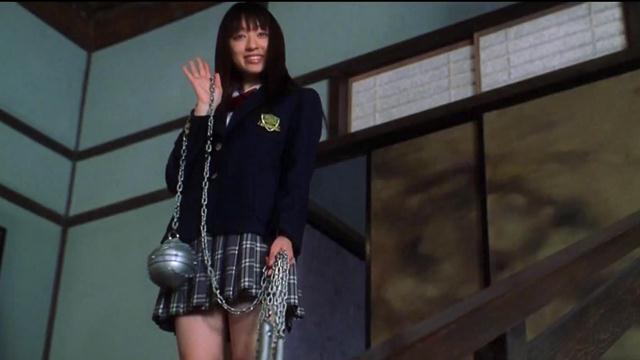
3. Despite it being a very entertaining and well thought out film, it holds very little original weight, rather, it appeals to an audiences senses of nostalgia in order to generate an interest. We can observe several components of this nostalgia with the presence of objects or other props, such as 'the Bride's' leathers, which look like Bruce Lee's iconic outfit.
 |
| fig 2. |
4. In practise, Postmodernism marks a cultural dead end; a point of no return, where a sense of originality is non-existent. In any case, a piece of media would not exist without influences. This case is twofold in the postmodernist case whereupon an idea would certainly be defined by fair criticisms according to established triumphs. By building upon these 'triumphs' it could be considered plagiarism by part of the creator, and by audiences alike, however, it is the construction of a postmodernist piece, which is built up from non original content, therefore it negates this unfortunate status by the powers of the art form.
5. Unlike modernism, which is art constructed as an alternative to traditional structures, postmodernism is the improvement of older ideas constructed in this way. In this way, they could be likened, as this film simply further explores ideas that have been tried and tested and condenses them into a heavy hardcore package of action. In this way, Kill Bill is simply a product of its time.
Figures
fig 1. Tarantino, Q. (2001). Kill Bill Volume 1. [poster]
fig 2. Tarantino, Q. (2001). Kill Bill Volume 1. [film still]
Bibliography
Michael, J. (2015). Postmodernist Nostalgia Films: Pastiche in the works of Quentin Tarantino. [online] Film Faculty. Available at: https://thefilmfaculty.wordpress.com/2015/01/10/postmodernist-nostalgia-films-pastiche-in-the-works-of-quentin-tarantino/ [Accessed 23 Sep. 2017].


10/05/2017


02/05/2017


Subscribe to:
Posts (Atom)