
 |
| fig 1. |

'...the term plagiarism in postmodernist cinema would almost encapsulate the medium as a whole.' (Michael, 2015)
2. It does not commit direct plagiarism of original content, and alternatively, it is postmodernist, because the notion of this concept highlights the end of originality. As long as any sort of event pertained to in the film is not obviously comprised of another directors efforts, a postmodernist film cannot undertake any accusation of this nature.
3. Despite it being a very entertaining and well thought out film, it holds very little original weight, rather, it appeals to an audiences senses of nostalgia in order to generate an interest. We can observe several components of this nostalgia with the presence of objects or other props, such as 'the Bride's' leathers, which look like Bruce Lee's iconic outfit.
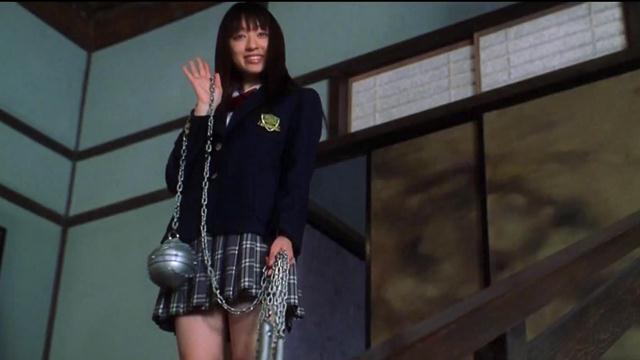 |
| fig 2. |
4. In practise, Postmodernism marks a cultural dead end; a point of no return, where a sense of originality is non-existent. In any case, a piece of media would not exist without influences. This case is twofold in the postmodernist case whereupon an idea would certainly be defined by fair criticisms according to established triumphs. By building upon these 'triumphs' it could be considered plagiarism by part of the creator, and by audiences alike, however, it is the construction of a postmodernist piece, which is built up from non original content, therefore it negates this unfortunate status by the powers of the art form.
5. Unlike modernism, which is art constructed as an alternative to traditional structures, postmodernism is the improvement of older ideas constructed in this way. In this way, they could be likened, as this film simply further explores ideas that have been tried and tested and condenses them into a heavy hardcore package of action. In this way, Kill Bill is simply a product of its time.
Figures
fig 1. Tarantino, Q. (2001). Kill Bill Volume 1. [poster]
fig 2. Tarantino, Q. (2001). Kill Bill Volume 1. [film still]
Bibliography
Michael, J. (2015). Postmodernist Nostalgia Films: Pastiche in the works of Quentin Tarantino. [online] Film Faculty. Available at: https://thefilmfaculty.wordpress.com/2015/01/10/postmodernist-nostalgia-films-pastiche-in-the-works-of-quentin-tarantino/ [Accessed 23 Sep. 2017].
No comments:
Post a Comment