
 |
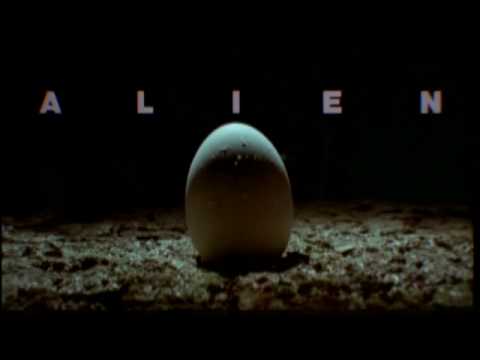
| fig (1). |
Science fiction movies have always had a significant draw to modern society, especially when referring to the earlier ones during the seventies, which seemed to follow many of the ideas the release of 2001: A Space Odyssey directed by Stanley Kubrick brought back in 1969. The idea of future life was a popular fantasy that many people shared in their cult followings of such movies. Alien was a late entry into the genre but surely has value of reflection regarding influence, it followed examples of set design in a similar way to that forerunner, it attempts popular tropes to that period, but it had a bit of history that gave it the depth that made it so memorable. (1) Originally, it was more of a template to most films of that era, over time gaining more traction as directors, concepts, and cast began to make footholds in the original script, giving it definition, handling it as to make it into the film we all know today. To emerge from this point it would be a good idea to follow in the same footsteps as an audience member would've had going into the cinema to see this movie for the first time, as it is clearly a film to be experienced rather than just watched.
Alien submerges you in what you expect to be reality, and then brings you into a world of horror by introducing the alien, the well known antagonist, designed by H.R Giger, which could be considered as a kind of sexual object, a fantasy in the world of the living. While the film lacks this whimsical edge that may be associated with sexual desire, the truth of the concept lies in the original artists psychology on this subject, a hidden objective that reaches the audience through deeper study.(2) The content of the movie is sincerely enjoyable with the kind of thought which backed its plot, a movie name of 'Dark Star ' comes to mind. The plot is a device that is wholly taken advantage of in the context of Alien, which extends it's clutches throughout the movie to pick out characters one by one until only the bare-bones cast remains, Ridley (Sigourney Weaver) and the alien, plus Jones the ship cat. To an audience these are the two memorable characters that they will leave the cinema remembering, and for good reason as it doesn't try to expand on individual background but rather takes an alternate route laced with empathy. Memorable content makes for a good movie, which is why Alien is such a success.
 |
| fig (2). |
On the other side of the coin there are several parts of this movie which could be better. Since the context of this flick is still tied up in the era of naturalistic dialogue sometimes the language is harder to understand. When the crew is talking about the share of ore aboard the ship, the dialogue becomes harder to comprehend as the sentences slip and slide over each other in a very informal fashion. As a result of this is parts of the film can become very monotonous very quickly. Not that it matters to drive the plot forwards, but you could also say that the script takes up too much of the film. Alien has a lot of fleshing out techniques that can get annoying when you want more action or thrilling aspects to your movie, so it would be better if instead of the dialogue they had some kind of expanded universe going on. Another thing which may bother some people is the absence of rationality with the crew on the Nostromo. This is talking about their unanimous disregard for safety protocol within the movie universe. While this is a plot device which signals a transition in the plot it doesn't correlate with the human sense of fight or flight, it feels more clinical than it should be as if the characters are not just regular people. It could interfere with the audiences sense of danger as if the application of the event was a bit less natural.(3)
To end this essay, Alien is a film that every science fiction buff should know all about. it may not be the most original film in terms of its screen writing, but the process upon which it was founded provided a foundation a great film. The writing provoked sequels and prequels which are more action orientated than the original, but lacked the artistic touch provided to the spark, when creating the first film. Aliens, the sequel had the expanded universe the fans liked to see from the first movie, and that's a respectable development from the production. Themes of the first movie provided a distinctive atmosphere of a horror, science fiction hybrid, plus the ideas from H.R Giger, on top of the entire idea of being stranded in space with hostile elements provided a platform that developed the idea of simple fantasy into something bigger.
Bibliography
(1) David Thomson, (1998), The Alien Quartet, London: Bloomsbury Publishing
(2) Ebert R, (2003) Roger Ebert.com http://www.rogerebert.com/reviews/great-movie-alien-1979
(3) Buckle A (2011) The Film Emporium http://thefilmemporium.blogspot.co.uk/2011/03/critical-analysis-alien-ridley-scott.html
Figure
(1) Still from Alien Trailer
(2)John Birkinshaw with Bolaji Badejo in the Alien suit
Hi Anabel,
ReplyDeletePlease see my previous comments about using the Harvard method for referencing! See here -
http://www.uca.ac.uk/library/academic-support/harvard-referencing/
You are asked to use 3 quotes to support your own analysis - have a look back at the example that Phil posted for you here, to see how to use them effectively -
http://ucarochester-cgartsandanimation.blogspot.co.uk/2016/09/fao-caa-yr-1-invisible-cities-2016_17.html